Where to Buy Quality Seeds and Seedlings in Nigeria
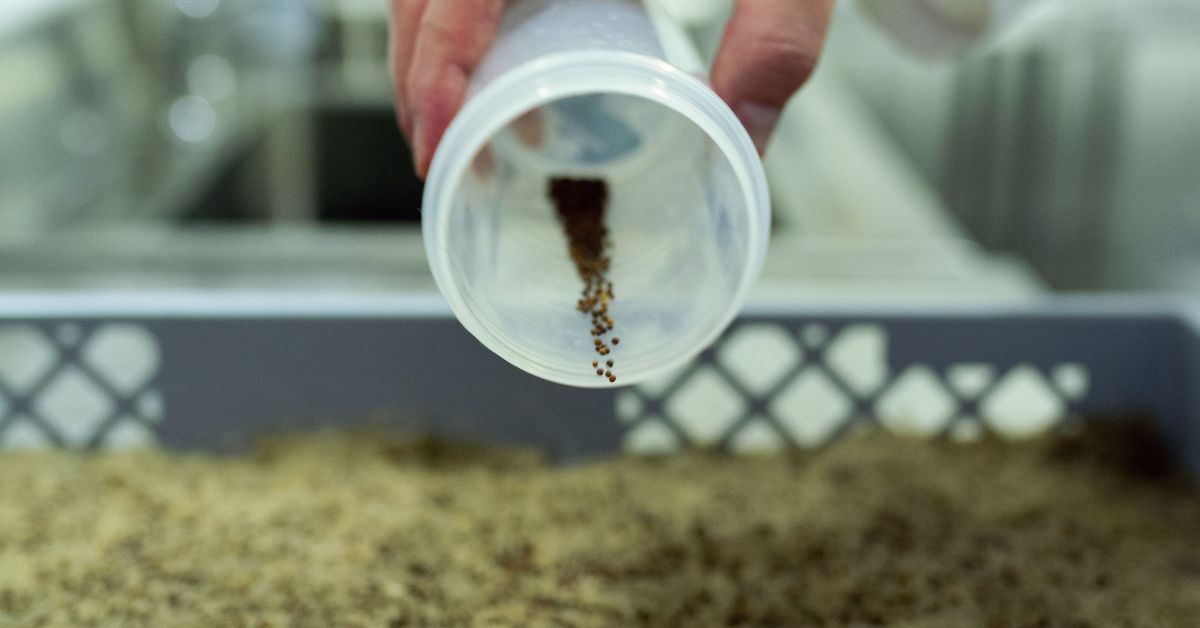
Planning to start a farm or grow a few vegetables at home? One of the first things you’ll need is good planting material.
Whether you’re looking for maize seeds, tomato seedlings, fruit trees, or improved crop varieties, where you buy them matters as much as what you grow.
Imagine preparing your land, buying seeds and waiting for them to germinate, only to discover that very few sprout. Or buying fruit-tree seedlings that arrive damaged or turn out to be a different variety than you expected.
These are problems every farmer or gardener would prefer to avoid.
Fortunately, there are several places to buy quality seeds and seedlings in Nigeria, including agricultural companies, nurseries, research institutes, agro-input shops and online platforms.
In this guide, we’ll explain where to look, the difference between buying seeds and seedlings, and how to make better purchasing decisions.
Where Can You Buy Quality Seeds and Seedlings in Nigeria?
You can find seeds and seedlings through different channels, depending on the crop you’re growing, the quantity you need and your location.
Some suppliers specialise in field crops such as maize and rice. Others focus on vegetables, fruit trees or nursery-raised plants.
Here’s a quick overview.
| Where to buy | What you may find | Best suited for |
| Seed companies and distributors | Improved maize, rice, soybean and vegetable seeds | Farmers looking for specific seed varieties |
| Plant nurseries | Vegetable seedlings, fruit trees and ornamental plants | Gardeners and farmers buying established plants |
| Agricultural research institutes | Selected improved planting materials | Farmers seeking institute-developed varieties |
| Agro-input stores | Packaged seeds and other farm supplies | Buyers who prefer shopping locally |
| Online agricultural retailers | Seeds and some seedlings | Buyers comparing products and ordering remotely |
| FloraTalk Hub | Listings and contact details for agricultural businesses | Finding suppliers by product and location |
No single channel is necessarily best for everyone. What matters is finding a supplier that can provide the right planting material and enough information for you to assess its quality.
1. Seed Companies and Agricultural Distributors
Seed companies are a useful starting point when you’re looking for a particular crop variety.
Some produce seeds directly, while others distribute varieties developed by breeding companies or research organisations.
Examples of companies operating in Nigeria include Premier Seed Nigeria, Value Seeds, Seed Co Nigeria and East-West Seed Nigeria.
Their product ranges differ. Some focus on field crops such as maize and rice, while others specialise in vegetable seeds.
Before contacting a company, identify the crop you want to grow and, if possible, the variety you’re interested in.
You can then ask whether the company sells directly to farmers or supplies its products through authorised dealers.
In Nigeria, the National Agricultural Seeds Council (NASC) regulates the formal seed industry. Its published seed-company information and the Nigerian Seed Portal can help buyers investigate seed producers.
For more detailed information about suppliers, varieties and prices, read our guide to Where to Buy Seeds in Nigeria.
2. Plant Nurseries and Seedling Suppliers
Not everyone wants to start plants from seeds.
If you’re establishing an orchard, growing vegetables for transplanting or replacing damaged plants, buying seedlings may be more practical.
Plant nurseries raise young plants until they are ready for sale or transplanting.
Depending on the nursery, you may find:
- Tomato, pepper and other vegetable seedlings.
- Citrus plants such as orange, lemon and lime.
- Mango and avocado plants.
- Pawpaw seedlings.
- Cocoa and cashew seedlings.
- Oil palm and coconut planting materials.
For fruit trees, you may also encounter grafted or budded plants.
These are not necessarily equivalent to ordinary seed-grown seedlings. The propagation method can affect how closely the new plant resembles the desired variety and, for some crops, how soon it begins producing.
When contacting a nursery, ask about the variety, propagation method, plant age, size and growing conditions.
If you’re buying online, request recent photographs of the actual plants or representative stock and ask how they will be packaged for transport.
A healthy seedling should have an appropriately developed root system, sound stems and leaves without obvious signs of severe pest or disease damage.
Remember that seedlings are living plants. Even healthy plants can suffer damage during transportation or after transplanting.
3. Agricultural Research Institutes
Agricultural research institutes are another source of information about improved planting materials in Nigeria.
Some also sell or distribute specific seeds and seedlings.
Examples include:
National Horticultural Research Institute (NIHORT), Ibadan: Works on horticultural crops and planting materials, including vegetables and fruit crops.
Nigerian Institute for Oil Palm Research (NIFOR), Edo State: Works on oil palm and other palms, including improved planting materials.
Cocoa Research Institute of Nigeria (CRIN), Ibadan: Researches cocoa, cashew and other mandate crops.
These institutions can be particularly relevant when you’re looking for planting materials associated with a specific crop-improvement programme.
However, research institutes do not necessarily operate like ordinary retail nurseries.
Stock may be seasonal, quantities may be limited, and purchasing procedures can differ.
Contact the institute directly to confirm what it currently sells, the prices and whether collection or delivery is available.
4. Local Agro-Input Stores and Garden Centres
Sometimes the easiest place to buy planting materials is a shop close to home.
Agricultural input stores commonly sell packaged seeds alongside fertilisers, tools and other farm supplies.
Garden centres may also stock seedlings, young fruit trees, herbs and ornamental plants.
Buying locally allows you to inspect the products before paying and ask the seller questions.
But convenience alone doesn’t guarantee quality.
For packaged seeds, check the producer’s details, variety, dates and applicable certification information.
For seedlings, examine the leaves, stems, roots where practical, and overall condition.
If the seller cannot explain the source or variety of the planting material, consider comparing other options before purchasing.
5. Where to Buy Seeds and Seedlings Online in Nigeria
Online shopping gives farmers and gardeners more opportunities to discover products that may not be available in nearby stores.
Agricultural retailers such as Afrimash, Farmsquare and HTS Farms list various planting seeds. Some online nurseries and garden businesses also advertise seedlings and young plants.
However, buying seeds online is different from ordering live seedlings.
Seeds can generally be packaged for transport more easily. Seedlings require greater care because heat, dehydration, rough handling and delivery delays can damage them.
Before placing an online order, confirm the seller’s delivery coverage, shipping method, total cost and what happens if the plants arrive damaged.
Also check whether the business is selling products directly or simply connecting you with another supplier.
6. Find Agricultural Suppliers Near You with Floratalk Hub
What if you don’t know any seed companies or nurseries in your area?
You can start your search on Floratalk Hub.
Floratalk Hub is an agricultural business directory designed to help people discover suppliers of farm inputs, planting materials, equipment and agricultural services in Nigeria.
Instead of contacting businesses at random, you can search for the type of product you need and look for relevant businesses by location.
For example, you might be looking for vegetable seeds in Lagos, fruit-tree seedlings in Ogun State or maize seeds in Kaduna.
Once you’ve found a suitable listing, contact the business to ask about availability, prices, varieties and delivery.
Explore Agricultural Suppliers on Floratalk Hub
Floratalk Hub does not sell the products listed by businesses or guarantee their quality, certification, availability or prices. Buyers should independently confirm supplier details before purchasing.
7. Government Agricultural Programmes and Cooperatives
Government agricultural programmes sometimes provide seeds or seedlings to participating farmers.
These programmes may operate through federal or state agricultural agencies, cooperatives or other agricultural development initiatives.
However, not every programme is open to the general public.
Some distributions are restricted to registered beneficiaries, selected communities or specific crops and farming seasons.
If you’re interested in government-supported planting materials, contact your state’s Ministry of Agriculture or Agricultural Development Programme (ADP) to ask about current opportunities and eligibility requirements.
Farmer cooperatives can also be useful sources of information about suppliers and bulk purchasing opportunities.
Avoid assuming that a programme mentioned in an older article is still accepting applications.
8. Should You Buy Seeds or Seedlings?
This depends on what you’re growing and how you plan to establish the crop.
| Consideration | Buying seeds | Buying seedlings |
| Initial purchase | Often cheaper per potential plant | Usually more expensive per plant |
| Plant establishment | Requires germination and early care | Early nursery stage has already been completed |
| Variety choice | Often offers a wider selection | Depends on nursery availability |
| Transportation | Usually easier to package and move | More vulnerable to damage |
| Main risks | Poor germination or incorrect variety | Root damage, disease or transplant shock |
For example, maize and rice are commonly established from seeds, while many vegetables can be started in nurseries and transplanted.
Fruit trees may be purchased as grafted or budded plants where preserving desirable varietal characteristics is important.
The best choice is the one suited to your crop, available resources and growing conditions.
9. How to Choose Quality Seeds and Seedlings
Whether you’re buying from a company, nursery or local seller, a few basic checks can help.
When buying seeds
Look for clearly labelled packaging, the correct crop variety, the producer’s information and appropriate testing or certification details.
For crops covered by NASC certification, check the relevant certification information.
Germination standards differ between crops and seed classes. There is no single minimum percentage that applies to every planting seed.
You can read our separate guide on How to Identify Quality Seeds Before Planting for more detailed guidance.
When buying seedlings
Check that the plants are reasonably uniform for the stated variety and age.
Look for healthy leaves, firm stems and signs of good root development.
Avoid plants with severe wilting, obvious disease symptoms, badly damaged roots or extensive pest infestations.
For grafted plants, ask about the rootstock, scion variety and whether the graft union has healed properly.
Questions to ask before paying
- What is the exact crop and variety?
- Who produced the seeds or raised the seedlings?
- Is the product suitable for my location and growing season?
- What quantity am I buying?
- Can I inspect the packaging or plants?
- What is the total price, including delivery?
- Can I obtain a receipt or other proof of purchase?
A seller who can provide clear answers makes it easier for you to decide whether the product meets your needs.
Frequently Asked Questions
Where can I buy quality seeds in Nigeria?
You can explore seed companies, authorised distributors, agricultural input stores and online retailers. NASC and the Nigerian Seed Portal provide information that can help you investigate formal seed suppliers.
Where can I buy seedlings in Nigeria?
Seedlings are available from commercial nurseries, some agricultural research institutes, garden centres and independent growers. Availability depends on the crop and location.
Can I buy seeds and seedlings online?
Yes. Some Nigerian agricultural businesses advertise seeds and seedlings online. Confirm the seller’s product details, payment arrangements and delivery coverage before ordering.
Are seedlings better than seeds?
Not always. Seedlings can reduce the time needed to raise plants from seed, but they may cost more and can suffer transplant shock. The best option depends on the crop and growing method.
Can I get free seeds or seedlings from the government?
Some government programmes distribute planting materials to eligible farmers. Availability, eligibility and application procedures vary, so check with the responsible agency.
How do I find agricultural suppliers near me?
You can search agricultural business directories such as Floratalk Hub, ask seed producers for local distributors or contact agricultural extension offices in your state.
Conclusion
Buying quality seeds and seedlings is an important part of preparing for a successful growing season.
Whether you’re planting a backyard vegetable garden or establishing a commercial farm, take time to identify the right variety, compare suppliers and inspect the planting materials before making a purchase.
If you already know you want seeds, our detailed guide to where to buy seeds in Nigeria will help you explore suppliers, crop varieties and advertised prices.
And when you’re ready to look for businesses supplying agricultural products in your area, visit Floratalk Hub to begin your search.